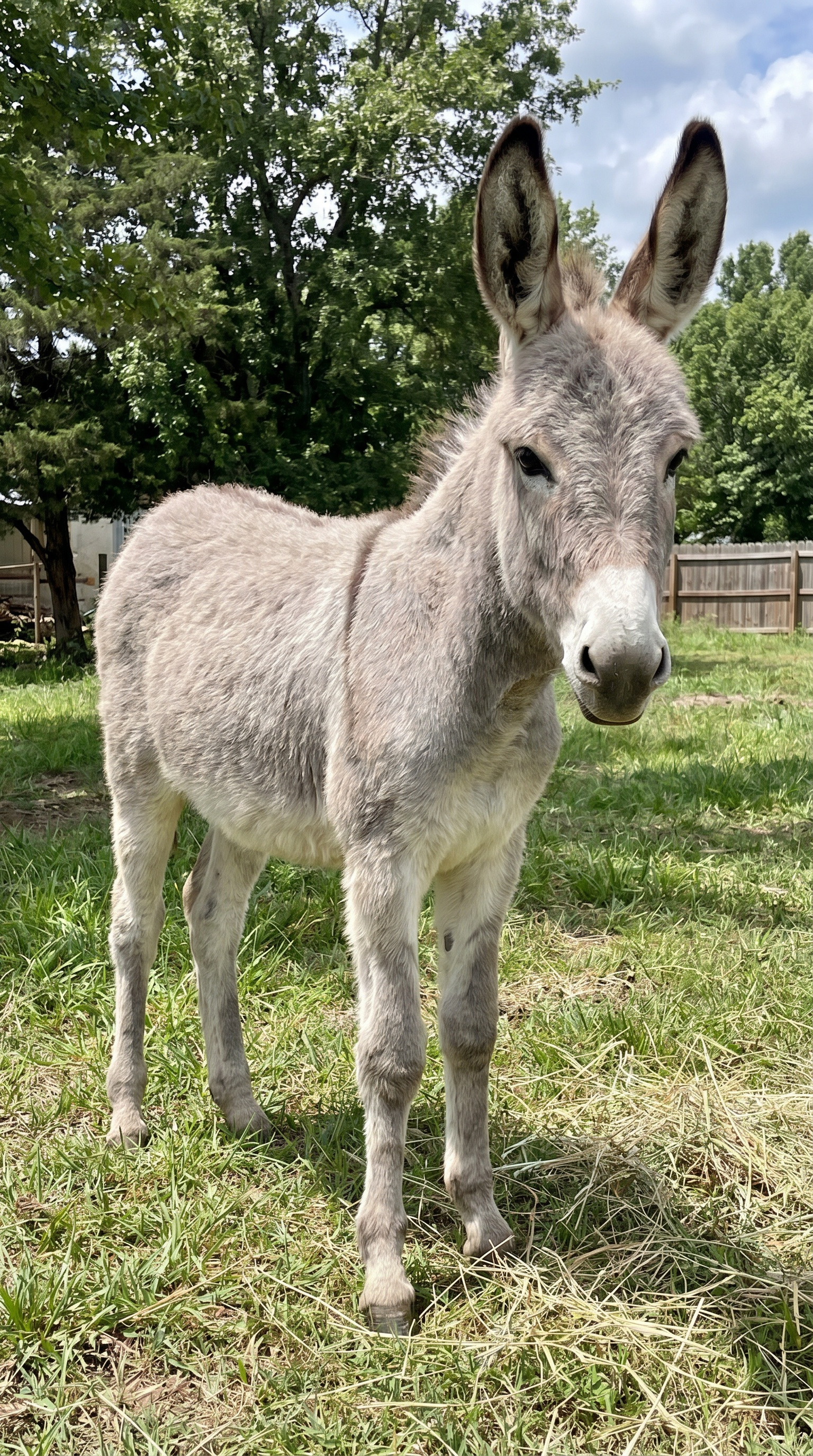
What Makes a Mammoth Donkey or Jackstock?
By Doc Slocum
Mammoth donkeys, also called Jackstock, are remarkable animals with a long history in American agriculture. They are recognized for their size, strength, presence, and versatility, and have traditionally been valued for producing large, durable mule offspring. However, not every large donkey automatically qualifies as Mammoth or Jackstock. These terms have specific meanings, especially when discussing breed type and registry standards.
In simple terms, a Mammoth donkey or Jackstock is expected to have both size and a build that reflects the traditional American Mammoth Jackstock type. These animals are meant to be substantial, powerful donkeys with enough height, bone, and body capacity to stand out from smaller donkey types. They should look like animals built for work, with a strong frame, good muscling, and enough overall scale to perform the job they were bred for historically.
One of the main factors people consider is height. Size is important in this breed category, and it is one of the clearest ways Jackstock differ from standard or miniature donkeys. Under American Mammoth Jackstock Association registry standards, jacks must meet a higher height requirement than jennets and geldings. A jack must be at least 14.2 hands tall. Jennets and geldings must be at least 14 hands tall. That height requirement alone shows these are not small donkeys. They are intended to be large-framed animals with a strong presence.
Height is just one part of the picture, though. A Mammoth donkey should also have sufficient body and bone to match that height. Registry standards also include heart girth and cannon bone measurements, which help indicate whether the donkey has the substance expected for the breed. Jacks must have at least a 61-inch heart girth and at least 8 inches of cannon bone circumference. Jennets and geldings must also have at least a 61-inch heart girth, with a minimum cannon bone measurement of 7.5 inches. These measurements matter because a tall but light, narrow, or fine-boned animal will not be sturdy enough to perform its job of carrying a load and staying sound.
In the end, a Mammoth Jackstock is defined by more than just size. True Jackstock are identified by a combination of pedigree, specific measurements, and color and breed-type standards that preserve the traditional American Mammoth Jackstock. For owners, breeders, and admirers, those standards help protect the size, substance, and historic character that make these donkeys so distinctive. Whether the interest is in breeding, ranch use, showing, or simply appreciating these impressive animals, understanding the official criteria helps distinguish a merely large donkey from one that truly meets Mammoth Jackstock standards.
Source
Breed standards and registration criteria come from the American Mammoth Jackstock Association: Jackstock Breed Characteristics.